
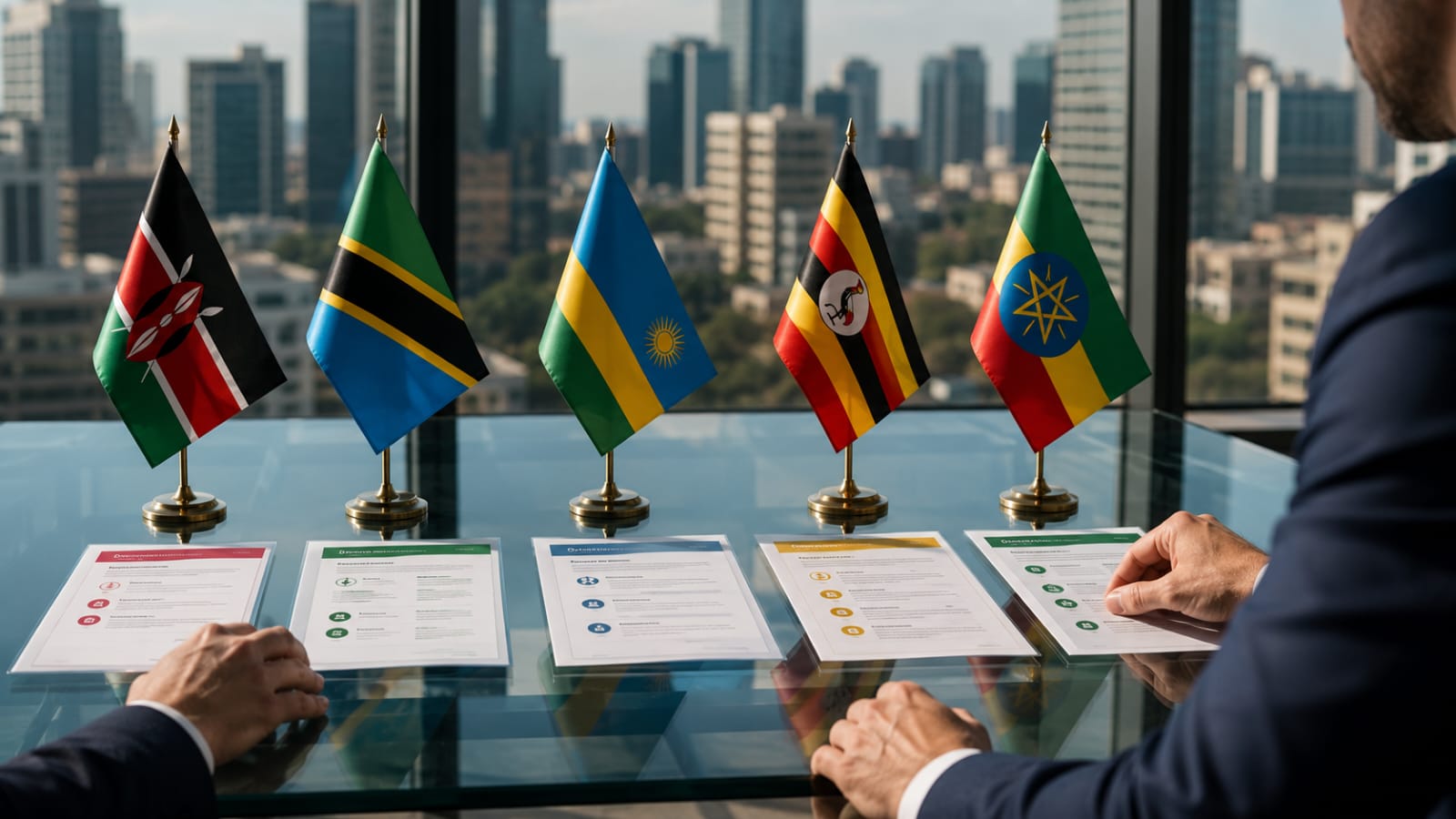

The Country-by-Country Outreach Guide for International Companies Entering Kenya, Tanzania, Rwanda, Uganda, and Ethiopia
East Africa is not a market. It is five distinct markets that share a geography, a trade framework, and increasingly an economic trajectory — but communicate differently, build trust differently, make decisions differently, and respond to outreach differently. Treating them as one is the fastest way to underperform in all of them.
Here is a scenario that plays out more often than most international B2B companies will admit:
A company decides to expand into East Africa. They draft a cold email sequence. They buy or compile a database of contacts across Kenya, Tanzania, Uganda, Rwanda, and Ethiopia. They set up their CRM, load the sequences, and launch the campaign — same subject line, same email body, same call to action — across all five markets simultaneously.
Six weeks later, the results are uniformly disappointing. Response rates are low across all markets. The meetings that did get booked did not convert. The pipeline is thin. The conclusion drawn internally: East Africa is a difficult market.
The real diagnosis: East Africa was treated as a single market when it is five distinct ones — each with its own communication culture, relationship-building norms, preferred channels, decision-making pace, and trust architecture. The campaign was not underperforming because East Africa is difficult. It was underperforming because the outreach did not speak to any specific market — it spoke to an abstraction of all of them.
This article maps what is actually different about B2B outreach in each of East Africa’s five most commercially significant markets, identifies the five generic outreach mistakes that consistently destroy results across the region, and tells you exactly what works — market by market.
Why the East African Community Is Not a Single B2B Market
The East African Community’s shared trade framework, common external tariff, and increasingly integrated economy create a genuine commercial rationale for treating the region as a single destination for investment and expansion. The AfCFTA is deepening that integration further. And for logistics, supply chain planning, and regional partnership strategy, treating the EAC as a bloc makes sense.

But for B2B outreach — the specific, human-to-human process of reaching decision-makers, building credibility, and advancing commercial relationships — the EAC is not a single market. It is five markets with meaningful cultural, linguistic, institutional, and commercial differences that directly shape how outreach is received, how trust is built, and how decisions are made.
The AIB Insights academic research from 2026 confirms this directly: despite a strong sense of shared East African identity, socio-cultural divides persist due to disparities in linguistics, education systems, and governance structures inherited from colonial legacies. These are not surface-level differences. They shape the communication culture of every B2B interaction.
📌 The most commercially successful international companies in East Africa do not run one regional B2B campaign. They run five coordinated but distinct campaigns — unified by brand identity and value proposition, but differentiated by communication style, channel mix, relationship timeline, and cultural calibration. LeadWhizz builds this architecture for every multi-market engagement.
The Five Most Common One-Size-Fits-All Outreach Mistakes — And Why They Fail
Before mapping what works in each market, here are the five generic outreach approaches that consistently underperform across East Africa — and the specific reason each fails:
| The Mistake | What It Looks Like | Why It Fails in East Africa |
| Generic cold email to all markets | Same subject line, same body, same CTA. Sent simultaneously to Kenya, Tanzania, Uganda, and Rwanda contacts. | Appears impersonal in all markets. In Tanzania, signals a supplier who does not understand the relationship-first culture. In Rwanda, generic messaging appears amateurish against a sophisticated corporate landscape. |
| Email-only follow-up | Send one email, wait for reply. If no reply, send the same email again two weeks later. | Email alone is insufficient in Tanzania and Uganda, where phone and WhatsApp carry the primary outreach weight. In Kenya, email without WhatsApp follow-up loses 40–60% of potential responses. |
| Same pitch regardless of sector priorities | A technology pitch written for a Nairobi fintech buyer sent unchanged to a Dar es Salaam agricultural cooperative. | Cultural context, sector priorities, and commercial vocabulary are entirely different. The Dar es Salaam agricultural buyer reads the same pitch as evidence you do not understand their business. |
| Single touchpoint outreach | One email. If no response, move on. | Across all East African markets, a single touchpoint is almost never sufficient. The average productive outreach sequence in Kenya requires 4–6 touches before a qualified response. In Tanzania, 6–10 touches across multiple channels over a longer timeline. |
| Pricing as the lead value proposition | Subject line: ‘Competitive pricing on X for your market.’ Body: lead with cost savings. | In Kenya and Tanzania, price-led outreach signals commodity positioning and immediately invites price comparison shopping rather than relationship evaluation. Quality, reliability, and track record lead — price follows. |
The most expensive outreach mistake in East Africa is not bad copy or wrong timing. It is treating five distinct relationship cultures as interchangeable. Every generic email sent to a Tanzanian buyer that was written for a Kenyan one is a trust signal in reverse — it signals that you do not understand who you are talking to.
Country-by-Country: What B2B Outreach Actually Works in Each East African Market
Here is the market-differentiated outreach intelligence that LeadWhizz applies across every multi-country campaign we run in East Africa:
| Factor | 🇰🇪 Kenya | 🇹🇿 Tanzania | 🇷🇼 Rwanda | 🇺🇬 Uganda |
| Communication tone | Direct, professional, warm. Appreciates efficiency alongside relationship. | Formal, indirect, patient. Warmth essential but rushed communication signals disrespect. | Goal-oriented, commercially direct. English-proficient corporate culture. | Highly formal, governance-conscious. Structured and process-driven. |
| Primary outreach channel | Email + WhatsApp + LinkedIn. All three work well together. | Phone + WhatsApp + in-person. Email opens doors, phone closes them. | Email + LinkedIn. Corporate email culture strong. WhatsApp growing. | Email + formal letter + in-person. Relationship hierarchy matters. |
| Decision speed | Moderate — 4 to 8 weeks for qualified B2B deals. | Slow — 8 to 16 weeks. Patience is not optional, it is required. | Fast — governance-driven efficiency culture compresses timelines. | Moderate — hierarchical approval processes add time. |
| Trust-building approach | Professional track record + local references + responsive communication. | Personal relationship building before commercial discussion. Patience is the currency. | Clean regulatory environment — compliance and credentials build trust fast. | Institutional credibility + government alignment signals commitment. |
| Swahili relevance | Business conducted in English. Swahili acknowledgement appreciated. | Swahili is primary in many business settings. English used formally. | Business in English. French also common. Kinyarwanda for local context. | English in corporate. Swahili growing. Local language warmth appreciated. |
| Follow-up preference | WhatsApp and email sequence. 48-hour follow-up window critical. | Phone call preferred. WhatsApp warm. Email alone is insufficient. | LinkedIn message + email. Clean, formal, professional. | Formal email. In-person follow-up signals serious intent. |
| LeadWhizz approach | Verified outreach + warm email/WhatsApp sequence + local number calls. | Warm matchmaking introductions + phone follow-up from local TZ numbers. | LinkedIn engagement + verified email outreach + compliance-first messaging. | Institutional introduction letter + structured follow-up via local agent. |
Kenya: The Most Accessible — But Not the Easiest
Kenya is East Africa’s most commercially mature B2B market and the most forgiving of imperfect outreach — because Nairobi’s corporate culture has the most exposure to international business practice and the highest tolerance for professional cold outreach. But accessible does not mean easy.
What works in Kenya is the integration of professional email with WhatsApp follow-up and phone calls from local numbers. Email establishes the context. WhatsApp creates the familiarity. The phone call converts. Any sequence that relies on email alone in Kenya is leaving 40–60% of its potential response rate on the table.
What consistently fails in Kenya is the assumption that a professional email sequence is sufficient without relationship signals — East African client references, a local phone number, a website that speaks to Kenyan buyers. Kenya’s decision-makers are sophisticated enough to quickly identify suppliers who have done the work from those who have not.
Tanzania: Patience Is the Strategy, Not the Obstacle
Tanzania is where most international B2B outreach campaigns that worked in Kenya fail — and the failure almost always comes from applying the same pace and channel mix that produced results in Nairobi.
Tanzania’s business culture is characterised by indirectness, relationship-first decision-making, and a preference for personal interaction over written communication. Negotiations in Tanzania can be a lengthy process — patience is a key virtue, and rushing discussions is actively counterproductive. Trust is established before commercial conversation begins, not as a consequence of it.
What this means for outreach: the first message to a Tanzanian buyer should not be a pitch. It should be an introduction. The second message should deepen the introduction. The third should begin to establish context for why this specific relationship makes sense. Commercial discussion arrives after personal credibility has been established — not before.
Phone calls and WhatsApp from local Tanzanian numbers are significantly more effective than email alone. Swahili openers — even a single polite phrase — signal cultural awareness and earn goodwill before any commercial content is read. And the timeline from first contact to qualified meeting needs to be planned at 8–16 weeks, not the 4–8 weeks typical in Kenya.
Rwanda: Efficiency Meets Governance
Rwanda is East Africa’s most business-friendly environment by regulatory measure — consistently ranked at the top of African ease-of-doing-business indices — and this shapes its B2B communication culture in a distinctive way. Rwanda’s corporate and government sectors value efficiency, transparency, and compliance signals in ways that are more explicit than other East African markets.
International suppliers entering Rwanda should lead with institutional credibility and governance alignment rather than relationship warmth. Demonstrating regulatory compliance, documented quality standards, and clean business credentials carries more weight faster in Rwanda than in any other East African market. LinkedIn is particularly effective here — Rwanda’s growing tech and financial services sectors are active on LinkedIn in ways that Uganda and Tanzania’s markets are not yet.
The decision-making pace in Rwanda is faster than Tanzania and broadly comparable to Kenya — but the evaluation criteria are more formally structured. Proposals need to be precise, compliant, and clearly aligned with Rwanda’s development priorities (technology, financial services, tourism, and regional logistics).
Uganda: Relationship Depth Before Commercial Speed
Uganda’s B2B market shares Tanzania’s relationship-first orientation while adding the complexity of Uganda’s imminent oil economy transition — which is creating new B2B procurement demand in supply chain, logistics, infrastructure, and energy services that did not previously exist at scale.
Outreach in Uganda follows the pattern of most relationship-intensive East African markets: warmth and personal connection precede commercial discussion, hierarchy is respected, and decision-making involves multiple stakeholders across family and business networks in ways that make multi-contact mapping essential.
WhatsApp is Uganda’s dominant professional communication channel for follow-up. Phone calls from local Ugandan numbers carry significantly more weight than calls from international numbers. And the follow-up sequence needs to be built for a longer timeline than Kenya — with touching points that maintain relationship warmth rather than pushing for commercial progress at every interaction.
Ethiopia: Scale, Hierarchy, and Institutional Credibility
Ethiopia is East Africa’s fastest-growing economy by GDP percentage — and its most distinct B2B market. The combination of scale (Ethiopia has a population of over 120 million — larger than all other EAC members combined), an investment-driven government policy framework, and a hierarchical business culture that places significant weight on institutional credibility makes Ethiopia require a differentiated approach from every other market in the region.
B2B outreach in Ethiopia is most effective when anchored in institutional introduction — a formal letter of introduction, a credible local agent or intermediary, or an introduction through a recognised trade platform or government channel. Cold outreach without institutional backing reaches lower in the organisational hierarchy than in Kenya or Rwanda and converts at lower rates.
The sectors generating the most active B2B procurement are infrastructure, manufacturing, agriculture, and energy — all aligned with Ethiopia’s government investment priorities. Outreach that explicitly aligns with these priorities, and demonstrates awareness of Ethiopia’s Homegrown Economic Reform Agenda, signals the level of market understanding that Ethiopian buyers require from serious international suppliers.
What Actually Works Across All East African Markets: The Non-Negotiables
Across the market-specific differences, five outreach principles consistently produce the best outcomes in every East African country:
| ❌ Generic Approach | ✅ What Actually Works in East Africa |
| One-size-fits-all cold email blast | Country-specific, sector-specific outreach — Kenya email references Nairobi’s commercial context, Tanzania message opens with relationship acknowledgement |
| Email-only follow-up sequence | Multi-channel sequence: email → WhatsApp (from local number) → phone call → value-add email. Channel mix calibrated per country. |
| Generic company brochure as first contact | Contextualised introduction — specific to the recipient’s sector, role, and country market. One paragraph that proves you researched them. |
| Price-led value proposition | Reliability-led value proposition — quality, warranty, track record in comparable markets, after-sales support. Price discussed after interest is established. |
| Single outreach touchpoint | 4–6 touch sequence for Kenya, 6–10 for Tanzania, with longer intervals between touches in more relationship-intensive markets. |
| Same timing across all markets | Business hours calibrated per country: 8am–6pm EAT for all markets, but Friday afternoon timing adjusted for Muslim-majority business communities in coastal Tanzania and Uganda. |
| Ignoring Swahili entirely | One Swahili phrase or opener in outreach to Tanzania and Uganda signals local awareness and earns goodwill before the pitch begins. |
How LeadWhizz Builds Market-Differentiated Outreach Across East Africa
LeadWhizz’s multi-market outreach capability is built on the insight that regional B2B strategy and country-level outreach execution are two different disciplines — and both need to be done well for international companies to generate results across East Africa.
At the regional strategy level, LeadWhizz helps international companies identify which East African markets to prioritise, in which sequence, and with which partner type in each country. At the country outreach level, we build separate, culturally calibrated campaigns for each market — with local phone numbers, market-specific messaging, country-appropriate channel mixes, and relationship timelines that match each market’s decision-making culture.
The result is an East Africa outreach programme that looks unified from the international company’s side — one partner, one reporting dashboard, one commercial conversation — but feels local from the buyer’s side in every market we work in.
That is the difference between a generic regional campaign that underperforms everywhere and a differentiated programme that builds real pipeline in each market at the pace and through the channels that each market actually responds to.
| 🌍 Stop Sending the Same Message to Every East African Market LeadWhizz builds country-specific, culturally calibrated B2B outreach for every East African market. Here is exactly what happens when you reach out: 📞 Step 1: Contact LeadWhizz — by email or via our website 📅 Step 2: We respond within 48 hours to schedule your Free Discovery Call 🔍 Step 3: On the call, we map your target markets across East Africa — Kenya, Tanzania, Rwanda, Uganda, Ethiopia — and build a market-differentiated outreach strategy for each 📊 Step 4: Within 48 hours you receive your Free Campaign Audit — a country-specific outreach plan with the right channels, the right tone, and the right timing for each market 🚀 Step 5: We build your verified databases and launch separate, calibrated outreach campaigns per market — so every prospect receives outreach that feels like it was written specifically for them The Discovery Call is FREE. The Campaign Audit is FREE. One strategy. Five markets. Zero generic messaging. Verified Leads. Measurable Growth. Guaranteed Results. 📩 b2b@leadwhizz.africa | www.leadwhizz.africa |
Frequently Asked Questions
Q: Should we start with Kenya or Tanzania for our East Africa B2B outreach?
For most international companies, Kenya is the recommended starting point — as East Africa’s most commercially mature market with the most accessible decision-makers, the strongest tolerance for professional cold outreach, and the deepest pool of verified distributor and buyer contacts in our database. Kenya’s success also creates the regional credibility that accelerates Tanzania and Uganda market entry. However, for companies in sectors where Tanzania’s strength is particularly pronounced — mining, port logistics, agricultural processing — or where the goal is to access the Central African corridor via Dar es Salaam, a parallel Kenya-Tanzania launch is often more strategically appropriate. LeadWhizz’s discovery call is specifically designed to determine the right sequencing for each company’s offer and timeline.
Q: How much longer does it take to build a B2B relationship in Tanzania compared to Kenya?
In our experience across 20+ industries in both markets, the timeline from first outreach contact to a qualified meeting with a decision-maker is typically 4–8 weeks in Kenya and 8–16 weeks in Tanzania — roughly twice as long. The timeline from first meeting to signed agreement is similarly extended in Tanzania, reflecting the deeper relationship validation that Tanzania’s business culture requires before commercial commitments are made. This does not mean Tanzania is a less valuable market — the partnerships established there are typically more durable and more resistant to competitive displacement than faster-formed relationships in more transactional environments. It means the timeline expectation needs to be set correctly from the outset.
Q: Does the same email template work across Kenya, Tanzania, and Rwanda?
No — and the gap in performance between a generic template and a market-calibrated message is significant in all three. The minimum differentiation required is: tone (more direct in Kenya and Rwanda, warmer and more indirect in Tanzania), opening approach (business-focused in Kenya and Rwanda, relationship-acknowledgement-first in Tanzania), and explicit cultural references that signal local awareness. At LeadWhizz, we build separate email sequences for each market — not templates with the country name swapped in. The subject lines, opening sentences, value propositions, and CTAs are all calibrated to what produces the highest response rates in each specific market context.
Q: Is WhatsApp outreach professional and appropriate in all East African markets?
WhatsApp is professional and appropriate in all five East African markets — but the role it plays in the outreach sequence differs by country. In Kenya, WhatsApp is an effective and expected follow-up channel after an initial email — professional in tone, brief, and referencing the prior email. In Tanzania, WhatsApp carries more weight than email in many business contexts, and a warm, conversational WhatsApp message from a local number can open doors that a formal email cannot. In Rwanda, WhatsApp is growing but LinkedIn is more prominent in corporate and tech sector outreach. In all cases, WhatsApp outreach should come from a WhatsApp Business account with a complete company profile — not a personal number with no business context.
Q: How does LeadWhizz calibrate outreach differently for each East African market?
LeadWhizz builds market-specific outreach across five dimensions for every multi-country campaign: channel selection and sequencing (which combination of email, WhatsApp, phone, and LinkedIn for each market), messaging tone and cultural calibration (the communication style, level of directness, and relationship acknowledgement appropriate to each country), follow-up timing and frequency (shorter intervals and more direct follow-through for Kenya, longer intervals with relationship-warming touchpoints for Tanzania and Uganda), language signals (Swahili openers for Tanzania and Uganda, French-language awareness for Rwanda’s bilingual corporate sector), and trust signal emphasis (local references and compliance documentation for Rwanda, personal relationship signals for Tanzania and Uganda, professional track record for Kenya). The result is outreach that reads as local in every market LeadWhizz manages.
Leave a Reply