
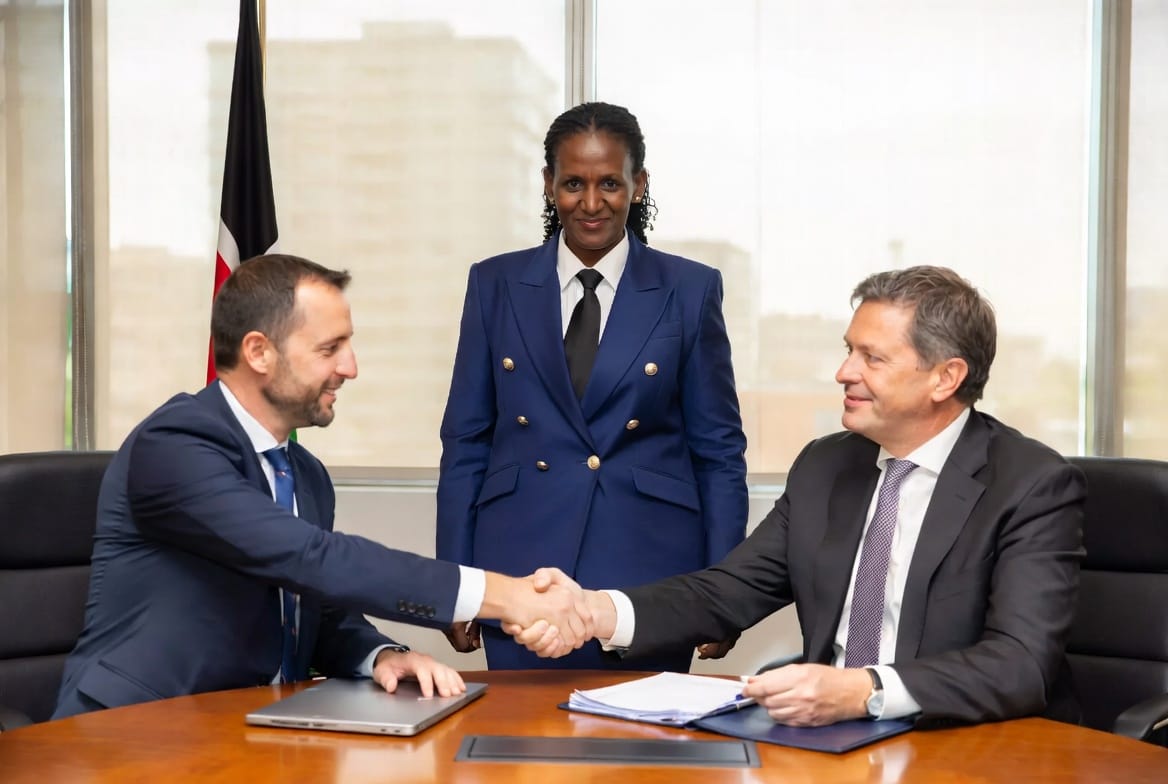

The Definitive Pre-Trip Meeting Guide for Companies Entering Kenya’s Private and Government Markets
The international companies that waste time in Nairobi are not the ones with bad products or the wrong market. They are the ones who booked the flight before they built the calendar.
Every week, delegations of international business executives land at Jomo Kenyatta International Airport with the same ambition: find the right private sector partners, meet the right government procurement contacts, and return home with a pipeline worth the cost of the trip.
And every week, a significant proportion of those delegations spend three to five days in Nairobi having unqualified conversations, attending meetings with people who lack purchasing authority, and following up months later with contacts who have gone cold.

This is not a Kenya problem. Kenya’s private sector is sophisticated, its government procurement market is active, and its business culture is genuinely receptive to international partnerships. The UK alone conducts £1.8 billion in annual bilateral trade with Kenya. The EABC East Africa CEO & Investment Forum 2026 brought over 450 delegates including cabinet ministers, senior government officials, and regional business leaders — all in a structured B2B and B2G meeting format.
The problem is that most international companies arrive hoping the right meetings will happen rather than engineering them to happen before departure.
This guide tells you exactly how to engineer them, for both the private sector (B2B) and government procurement (B2G) channels that together represent Kenya’s full commercial opportunity.
The Scale of Kenya’s B2B and B2G Meeting Opportunity
Understanding both channels, and what they require from international companies, starts with understanding their size.
| $6B+ Kenya’s annual government procurement spend — approximately 15% of GDP — across infrastructure, healthcare, technology, agriculture, and energy |
| 300M+ The East African Community market accessible through partnerships established in Nairobi — Kenya is the commercial gateway for the entire region |
| 450+ Delegates at the EABC East Africa CEO & Investment Forum 2026 — including Ministers, senior government officials, investors, and captains of industry — confirming that high-level B2G access is actively available for prepared international companies |
The B2B private sector market in Kenya spans distribution, manufacturing, fintech, logistics, healthcare, construction, agriculture, and professional services — with internationally competitive companies actively seeking international partners, technology providers, and suppliers. The B2G government market adds a parallel, structured procurement channel across the same sectors — governed by Kenya’s Public Procurement and Asset Disposal Act and regulated by the PPRA.
For international companies that understand both channels, Kenya offers a meeting landscape that is genuinely among the most commercially rich on the continent. For those that understand only one — or neither — it is an expensive week of inconclusive conversations.
B2B vs B2G in Kenya: Why They Require Completely Different Meeting Strategies
The single most common mistake international delegations make in Kenya is treating B2B and B2G meetings with the same approach. The decision-makers are different. The outreach channels are different. The meeting protocols are different. The timeline is different. And the outcome, a commercial agreement, is reached through entirely different mechanisms.
| Factor | B2B — Private Sector Meeting | B2G — Government / Parastatal Meeting |
| Decision-maker | CEO, MD, or procurement director at a private company | Accounting officer, PS, county government official, or parastatal board |
| Meeting tone | Commercial — both parties evaluating mutual benefit | Formal — structured protocol, often requiring prior appointment through official channels |
| Outreach approach | Email, WhatsApp, and LinkedIn — direct contact with decision-maker | Formal letter of introduction + follow-up call — informal channels rarely open the door alone |
| Timeline to meeting | 1–3 weeks with verified outreach | 3–8 weeks — procurement calendars and approval processes add time |
| What they want to hear | ROI, competitive pricing, delivery timelines, previous client references | Compliance, local content commitments, regulatory alignment, and track record with public sector clients |
| Contract mechanism | MoU, distribution agreement, or supply contract | Tender, RFQ, RFP, or direct procurement — regulated under PPRA |
| LeadWhizz role | Identify, verify, and warm outreach to target decision-makers | Identify the right government buyer, prepare the introduction package, and facilitate a formal meeting request |
LeadWhizz builds separate strategies for B2B and B2G meeting targets — because the intelligence, outreach, and preparation required for each are fundamentally distinct. A single-approach delegation strategy consistently underperforms in both channels.
Walking into a Kenyan government ministry without a formal introduction and a prepared brief is not a meeting. It is an unscheduled visit that will be politely redirected to a junior official with no procurement authority. The right B2G meeting in Kenya requires preparation that starts weeks before departure.
The B2G Opportunity: Kenya’s Government Sectors That Most Actively Procure From International Companies
Kenya’s national and county government procurement is active across multiple sectors that specifically require international supplier relationships — either because domestic supply is insufficient, or because technical specifications require internationally certified products or expertise.
Here are the sectors where international companies most frequently secure B2G meetings and supply contracts in Kenya:
| Sector | Key Government Bodies | What International Companies Supply |
| Healthcare | Ministry of Health, county health departments, KEMSA | Medical equipment, pharmaceuticals, health tech, diagnostics, PPE |
| Infrastructure & Construction | State Department for Infrastructure, KENHA, county governments | Construction materials, engineering services, project management, specialist equipment |
| Technology & Digital | Ministry of ICT, Konza Technopolis Authority | Software, cybersecurity, cloud infrastructure, data solutions, AI systems |
| Agriculture & Food Security | Ministry of Agriculture, KEPHIS, AFA | Agri-inputs, processing equipment, irrigation technology, cold chain solutions |
| Energy & Renewables | Ministry of Energy, KETRACO, REREC | Solar systems, grid technology, storage solutions, energy efficiency equipment |
| Education | Ministry of Education, KICD, county education offices | E-learning platforms, lab equipment, school infrastructure, training solutions |
| Financial Services | CBK, Treasury, county revenue authorities | Fintech systems, payment infrastructure, compliance technology, insurance solutions |
📌 Kenya’s 47 county governments represent a significant and often overlooked B2G opportunity for international companies. County budgets collectively fund healthcare facilities, infrastructure, agricultural development, and digital services — and county procurement officers are frequently more accessible than national ministry counterparts. LeadWhizz maps both national and county government buyer targets for every B2G engagement.
Why Most International Delegations Leave Kenya Without a Qualified Pipeline
The gap between the commercial opportunity Kenya offers and the outcomes most international delegations actually achieve is not a market problem. It is a preparation problem. Here are the five failure patterns we observe most consistently:
1. No Pre-Qualified Meeting List
Arriving in Nairobi with a vague intention to ‘meet potential partners and government contacts’ is not a strategy. Without a pre-built, verified list of specific individuals — named, titled, at the right seniority level, in the right organisations — every day on the ground is spent trying to reach people who may or may not be available, relevant, or in a position to buy.
The companies that leave Kenya with pipeline arrive with a meeting calendar already built. Not aspirational targets. Confirmed appointments.
2. Meeting at the Wrong Level
One of the most common and costly mistakes in both B2B and B2G meetings in Kenya is securing a meeting with a contact who does not have purchasing authority. A marketing manager at a logistics company cannot sign a distribution agreement. A junior official at a ministry cannot commit procurement spend. Without seniority verification before the meeting is booked, delegations waste significant time on conversations that are informative but commercially sterile.
3. Generic Presentation Prepared for No One Specific
International companies frequently prepare a single company overview deck and present it to every meeting — regardless of whether the contact is a private sector distributor, a government procurement officer, a fleet manager, or an investment agency. In Kenya’s relationship-first business culture, a generic presentation is immediately legible as a sign that the visitor did not prepare specifically for this meeting.
High-quality B2B and B2G meetings in Kenya require meeting-specific preparation — what this contact’s organisation does, what their current procurement priorities are, what their known suppliers look like, and why this specific partnership makes sense for both parties.
4. No Follow-Up System Ready Before Departure
The 72-hour window after a productive meeting in Nairobi is the most valuable commercial window in the entire trip. Most international delegations do not have a follow-up system designed and ready before they leave. By the time they return home, recover from the flight, and draft a follow-up email, the warmth from the meeting has already started fading.
In a market where consistent, professional follow-through is itself a trust signal, slow or generic post-meeting communication actively undermines the positive impression made in the room.
5. Confusing Activity With Outcomes
Ten meetings in four days feels productive. But ten meetings with unqualified contacts, at the wrong seniority level, followed by no structured follow-up, produce the same commercial outcome as zero meetings — just with a larger hotel bill. The measure of a successful Kenya delegation is not the number of meetings held. It is the number of qualified next steps agreed and executed within 14 days of return.
How to Prepare a High-Quality B2B and B2G Meeting Calendar for Kenya — Step by Step
The preparation for a Kenya delegation that produces results starts at least four to six weeks before departure. Here is the process that consistently produces the best outcomes:
Step 1: Define Your Meeting Objectives by Channel
Before any outreach begins, define exactly what a successful meeting looks like in each channel. For B2B: what type of partner are you seeking — distributor, agent, joint venture, strategic supplier? What sector? What company size? What decision-making title? For B2G: which ministries, parastatals, or county governments are in your procurement scope? What contract value range are you qualified to supply? What procurement route — RFQ, RFP, or direct procurement — is most appropriate for your offer?
Undefined objectives produce undefined meetings. Specific objectives produce specific meetings with specific people.
Step 2: Build a Verified Target List — Not a Wishlist
A target list for a Kenya delegation is not a list of organisations. It is a list of named individuals at the right seniority level, in the right roles, whose current priorities align with what you are bringing to market. For B2B contacts, this means procurement managers, MDs, and CEOs with confirmed purchasing authority. For B2G contacts, this means accounting officers, Principal Secretaries, procurement directors, and county-level decision-makers.
LeadWhizz builds these verified target lists from our East African database — every contact confirmed active, in role, and matched to your specific meeting brief.
Step 3: Outreach Starts Weeks Before You Travel
The most productive Kenya delegations begin their outreach four to six weeks before departure. This is not the timeline that feels natural — most international companies want to confirm the trip before committing to outreach. But the timeline of a productive B2B or B2G meeting pipeline in Kenya requires:
- Week 4–6 before trip: initial outreach — email and WhatsApp introduction to each target
- Week 3–4 before trip: follow-up and meeting proposal — specific dates, location, and agenda
- Week 2–3 before trip: confirmation and pre-meeting brief sent to each confirmed contact
- Week 1 before trip: final confirmations, logistics, and meeting-specific preparation completed
B2G contacts require additional lead time — formal introduction letters, ministerial office scheduling, and approval processes all extend the timeline. Starting B2G outreach fewer than four weeks before travel is rarely enough.
Step 4: Prepare Meeting-Specific Briefs for Every Appointment
For each confirmed meeting, prepare a brief that includes: the contact’s role and organisation background, their known procurement priorities and current supplier relationships, your specific value proposition for this meeting — not a generic pitch, a suggested agenda that respects their time, and a clear proposed next step for the meeting to end with.
This level of preparation is not standard practice among international delegations visiting Kenya. Which is precisely why companies that do it are immediately distinguishable, and disproportionately successful.
Step 5: Build the Post-Trip Follow-Up System Before You Depart
Define exactly what happens after each meeting type, before you travel. Hot prospects receive a personalised email and WhatsApp follow-up within 24 hours of the meeting. Warm contacts receive a follow-up within 72 hours. Government meeting follow-ups receive formal correspondence within 48 hours. Every follow-up references the specific conversation, not a generic response.
LeadWhizz deploys post-delegation follow-up campaigns on behalf of international clients, so the momentum from the trip continues without requiring the delegate to manage it across time zones.
How LeadWhizz Builds Your Kenya Meeting Calendar — B2B and B2G
LeadWhizz’s delegation support service is built specifically for international companies and trade missions planning Kenya market entry — covering the full pre-trip, during-trip, and post-trip pipeline infrastructure.
| ❌ How Most Delegations Operate | ✅ How LeadWhizz-Prepared Delegations Operate |
| Arrive without a pre-qualified meeting list | Arrive with a verified shortlist of decision-makers — private and government — who have been profiled against your brief |
| Hope to meet the right people on the event floor | Every meeting is pre-booked and confirmed — with the right person, at the right level, in the right organisation |
| Generic company presentation prepared for anyone | Meeting-specific preparation for each contact — their role, their procurement priorities, their known suppliers |
| Follow up weeks later with a bulk email | Personalised follow-up deployed within 48 hours — email, WhatsApp, and phone from local Kenyan numbers |
| Return home unsure if anything will progress | Post-trip pipeline report — every meeting outcome tracked, next steps assigned, warm leads in active follow-up |
Our delegation support service covers both B2B and B2G channels simultaneously — so international companies do not have to choose between private sector and government opportunities. We identify, verify, and warm both target sets, and build a coordinated meeting calendar that maximises the commercial value of every hour on the ground in Nairobi.
The best trade delegations to Kenya are not the ones with the biggest budgets or the most senior executives. They are the ones that treated meeting preparation as the investment — not the meetings themselves.
| 🇰🇪 Land in Nairobi With a Full Calendar of High-Quality Meetings B2B. B2G. Pre-qualified. Pre-booked. Pre-prepared. Here is exactly what happens when you contact LeadWhizz: 📞 Step 1: Contact LeadWhizz — by email or via our website 📅 Step 2: We respond within 48 hours to schedule your Free Discovery Call 🔍 Step 3: On the call, we map your delegation profile, your target meeting categories (B2B, B2G, or both), your sector focus, and your Kenya trip timeline 📊 Step 4: Within 48 hours you receive your Free Campaign Audit — a verified meeting target list with a recommended outreach strategy and meeting preparation framework 🤝 Step 5: We build your pre-trip meeting calendar — every meeting pre-qualified, pre-booked, and prepared — so you land in Nairobi ready to close, not to explore The Discovery Call is FREE. The Campaign Audit is FREE. You land in Nairobi with a full calendar of pre-qualified B2B and B2G meetings — and a system to convert every conversation into pipeline. Verified Leads. Measurable Growth. Guaranteed Results. 📩 b2b@leadwhizz.africa | www.leadwhizz.africa |
Frequently Asked Questions
Q: How far in advance should an international company start arranging meetings for a Kenya trade delegation?
For B2B private sector meetings, LeadWhizz recommends beginning outreach four weeks before departure. For B2G government and parastatal meetings, six weeks is the minimum — and eight weeks is preferable for senior Ministry-level contacts. This timeline accounts for Kenya’s business calendar, formal scheduling processes within government offices, and the multiple touchpoints required to confirm a qualified meeting with a decision-maker rather than a gatekeeper. Companies that begin outreach the week before they travel consistently find that the most valuable contacts are unavailable on short notice.
Q: What is the difference between a B2B and a B2G meeting in Kenya, and which should our delegation prioritise?
B2B meetings target private sector decision-makers — distributors, buyers, MDs, and procurement heads at commercial companies. B2G meetings target government procurement officers, accounting officers, Principal Secretaries, and county-level officials with authority over public procurement contracts. Both channels are commercially valuable — Kenya’s government procurement market is estimated at over $6 billion annually. The right balance depends on your product or service category. Healthcare, infrastructure, technology, and energy companies typically find the strongest B2G opportunity, while FMCG, automotive, and industrial suppliers find B2B more productive. LeadWhizz recommends building targets in both channels and letting the verification process identify where genuine opportunity is highest for your specific offer.
Q: How does Kenya’s government procurement process work for international companies?
Kenya’s public procurement is governed by the Public Procurement and Asset Disposal Act and regulated by the PPRA. The primary procurement routes available to international companies are: Request for Quotation (RFQ) for contracts below specified thresholds, Request for Proposals (RFP) for consultancy and service contracts, open competitive tender for larger contracts, and direct procurement in emergency or sole-source situations. International companies typically enter government procurement as a direct supplier, through a local agent or joint venture partner, or as a subcontractor to a primary contractor. The B2G meeting process serves a critical function: it is often the pre-procurement engagement that positions your company for the formal tender when it is released.
Q: Can LeadWhizz arrange meetings at the county government level as well as national ministries?
Yes. Kenya’s 47 county governments collectively fund significant procurement across healthcare, infrastructure, agricultural development, and education. County procurement officers are frequently more accessible than national ministry counterparts, and county-level meetings can produce commercial engagements faster — particularly for companies whose products or services fit county-level project scales. LeadWhizz maps both national and county government targets and advises on which level is most appropriate for each client’s offer and realistic contract value.
Q: What happens if a confirmed meeting is cancelled or rescheduled while we are already in Nairobi?
In Kenya’s business environment, meeting schedule changes are common and should be planned for. LeadWhizz builds buffer time and backup contacts into every delegation calendar — so a cancelled meeting creates space for an alternative rather than dead time. Our on-the-ground support service can also activate replacement contacts from our verified database on short notice, using WhatsApp and phone to reach local decision-makers who may be available within 24–48 hours of an unexpected gap in the schedule.
Leave a Reply