

A Sector-by-Sector and Country-by-Country Intelligence Update for International Companies
| 📊 Sources: African Development Bank Group — African Economic Outlook 2026, released 26 May 2026, Brazzaville; United Nations — World Economic Situation and Prospects 2026; IMF Regional Economic Outlook; Kenya National Bureau of Statistics 2026. |
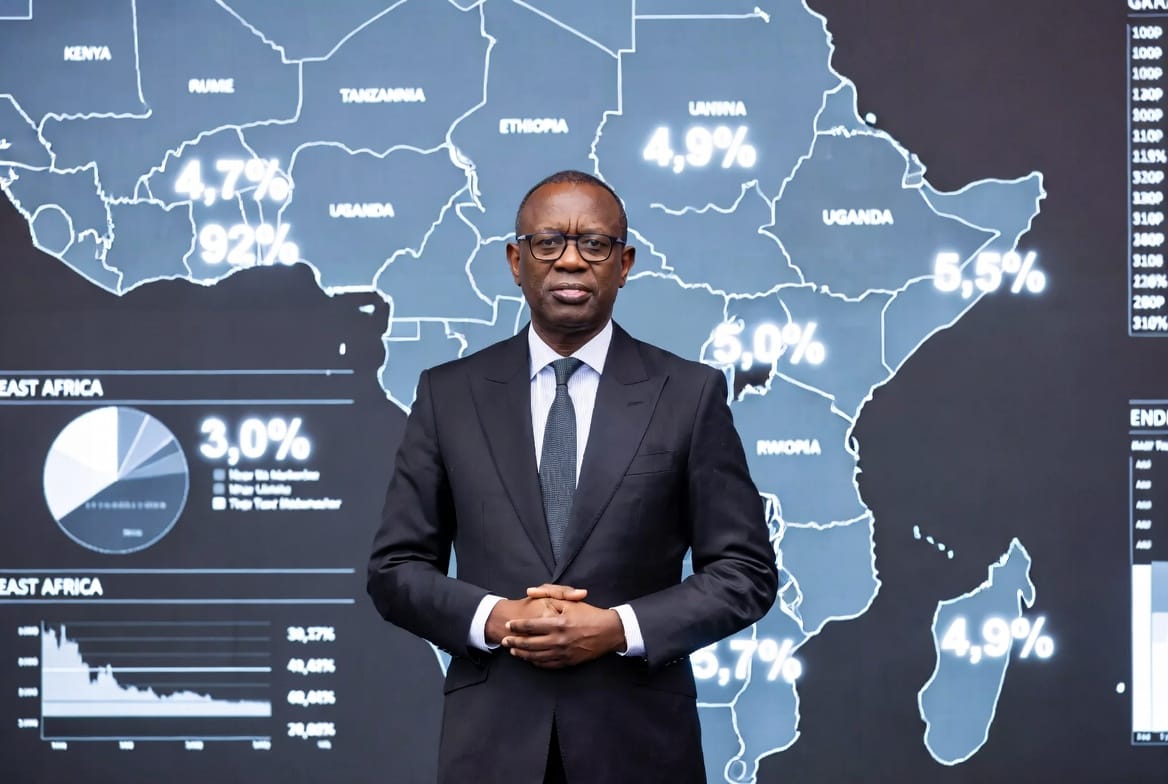
The mid-year data is not ambiguous. East Africa is still Africa’s fastest-growing region. The sectors driving that growth are not evenly distributed. And the window for B2B market entry before competition intensifies is measurably narrower than it was six months ago.
Two major international economic bodies released their updated assessments of East Africa’s economic trajectory within weeks of each other this year. The African Development Bank published its African Economic Outlook on 26 May 2026 in Brazzaville. The United Nations released its World Economic Situation and Prospects 2026. Both reached the same fundamental conclusion, with slightly different headline numbers.
East Africa remains the fastest-growing region on the African continent. The growth is broad-based, multi-country, and driven by structural factors, not commodity cycles or one-off windfalls. And despite a modest moderation from 2025’s peak figures, the trajectory through 2027 is firmly upward.
For international companies that have been watching East Africa and waiting for more certainty before committing to market entry, this mid-year data is the signal. This article translates both reports from macroeconomic findings into actionable B2B intelligence: which sectors are attracting the most commercial activity, which countries offer the most accessible first-mover opportunity, and exactly what needs to happen before the end of 2026 to build a pipeline in the region’s fastest-moving markets.
The Mid-Year Headline Numbers: What the Data Actually Says
The two most authoritative mid-year data sources on East Africa’s economic performance in 2026 paint a consistent picture, with one important nuance that international companies planning market entry need to understand.
| 5.9% East Africa projected real GDP growth in 2026 — AfDB African Economic Outlook, 26 May 2026, Brazzaville. Moderating from 6.6% in 2025 due to rising energy and import costs linked to Middle East disruptions, before rebounding to 6.4% in 2027. |
Source: African Development Bank Group, African Economic Outlook 2026, released 26 May 2026
| 5.8% East Africa projected growth in 2026 per UN World Economic Situation and Prospects 2026 — significantly outperforming all other African sub-regions. |
Source: United Nations, World Economic Situation and Prospects 2026
| 4.2% Africa-wide average GDP growth in 2026 — meaning East Africa is growing at roughly 40% faster than the continental average, confirming its structural outperformance. |
Source: African Development Bank Group, African Economic Outlook 2026
| 9.4% Rwanda’s GDP growth in 2025 — the fastest in East Africa, and a signal of where governance-driven investment attraction is producing extraordinary commercial momentum. |
Source: As cited by AllAfrica from AfDB 2026 data
The important nuance: the moderation from 2025’s 6.6% to 2026’s 5.9% is not a negative signal for B2B investors. The AfDB explicitly attributes this moderation to external factors, Middle East energy costs, rather than structural weakness. The rebound projected for 2027 to 6.4% confirms that the underlying economic architecture is intact. For B2B companies, this is a buying-the-dip moment, not a warning sign.
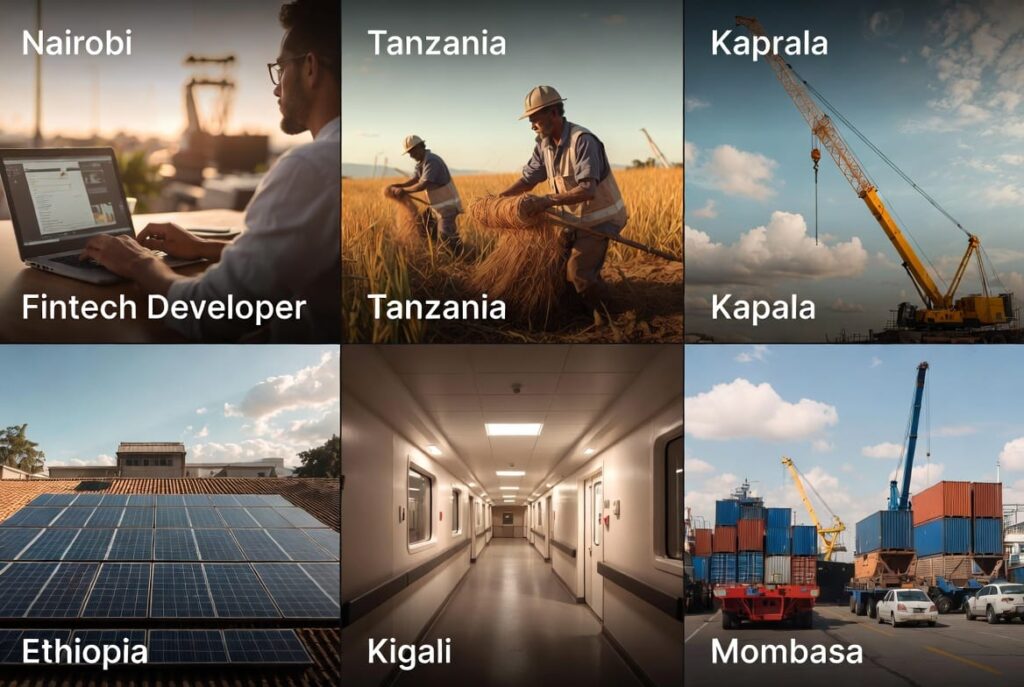
📌 Kenya’s individual 2026 growth figure was revised to 4.6% by the AfDB, reflecting high fuel prices and Middle East war shocks on import costs. This is a moderation from previous projections, but Kenya remains the region’s commercial hub, and the sectors driving B2B demand (fintech, agriculture, logistics, construction) are all structurally supported by domestic policy investment independent of external commodity prices.
Country-by-Country: Where the B2B Opportunity Is Moving in H2 2026
East Africa’s growth in 2026 is not led by a single economy. Multiple countries are contributing simultaneously, which for B2B companies means genuine optionality in market entry rather than a single high-stakes bet on one country.
| Country | 2026 Growth | Key Sectors | B2B Significance | Entry Signal |
| 🇰🇪 Kenya | 4.6% | Fintech, logistics, technology, agribusiness, services | Most sophisticated private sector in EA. Nairobi = commercial gateway. Best B2B entry point for most sectors. | Gateway |
| 🇹🇿 Tanzania | 6.1% | Mining, agriculture, construction, port logistics | Dar es Salaam port expansion driving logistics B2B. Less competition than Kenya. Landlocked corridor to DRC, Zambia, Malawi. | High Value |
| 🇪🇹 Ethiopia | 9.4% | Infrastructure, manufacturing, agriculture, energy | Fastest-growing EA economy. Major infrastructure procurement. Industrial parks attracting FDI. Large population = large demand. | First Mover |
| 🇷🇼 Rwanda | 9.4% | ICT, financial services, tourism, logistics | Africa’s most business-friendly environment. MICE hub. Strong governance. Gateway to DRC. High-quality B2B partner market. | Fast Moving |
| 🇺🇬 Uganda | ~6% | Oil sector launch, agriculture, services, fintech | Oil production beginning creates supply chain B2B demand. Growing services economy. EAC trade corridor. | Emerging |
Growth figures: AfDB African Economic Outlook 2026 (May) and UN WESP 2026. Rwanda 9.4% from 2025 AfDB data; 2026 projection 7.2% per IMF. Ethiopia 9.4% from AllAfrica/AfDB 2026 report. Kenya 4.6% KNBS confirmed, AfDB forecast.
East Africa’s growth story is no longer held up by Kenya alone. Rwanda and Ethiopia are delivering double-digit momentum. Tanzania is the port gateway to Central Africa. Uganda’s oil era is beginning. For B2B companies, this polycentric growth means multi-market strategies are now more accessible — and more necessary — than ever.
Sector-by-Sector: Where B2B Demand Is Moving in 2026
The mid-year data does not just confirm that East Africa is growing. It signals which sectors are generating the most active B2B commercial demand, and which represent the sharpest opportunity gaps for international companies prepared to enter now.
| Sector | Mid-Year Signal | B2B Opportunity for International Companies | Momentum | |
| 🚀 | Fintech & Digital Finance | Kenya is Big Four African fintech market. 85% adult financial inclusion. M-Pesa ecosystem expanding into insurance, credit, B2B payments. | Cybersecurity, cloud infrastructure, payments tech, digital lending, RegTech, InsurTech, SaaS for financial institutions. | Very High |
| 🚀 | Agriculture & Agritech | AfDB identifies agriculture as primary East Africa growth driver. Record tea, coffee, and horticultural exports. AI and IoT adoption accelerating. | Agri-inputs, processing equipment, precision farming tech, cold chain, crop insurance, irrigation systems, grain processing. | Very High |
| 🏗️ | Infrastructure & Construction | Government infrastructure investment cited as key 2026 driver across Kenya, Ethiopia, Tanzania. AfCFTA trade corridors expanding. | Construction materials, engineering services, project management tech, smart building systems, water technology. | High |
| ⚡ | Renewable Energy | Kenya 90%+ renewable electricity grid. Government committed to green economy. EV transition accelerating. Regional energy expansion. | Solar systems, storage solutions, EV charging infrastructure, grid technology, energy management systems. | High |
| 🏥 | Healthcare & Medtech | East Africa hospital network expanding rapidly. Government prioritising healthcare infrastructure under BETA and regional programmes. | Medical equipment, diagnostics, health tech platforms, pharmaceuticals, telemedicine, health data systems. | High |
| 📦 | Logistics & Supply Chain | AfCFTA trade corridors creating new cross-border logistics demand. Mombasa Port expansion. Dar es Salaam fastest-growing port in EA. | Fleet management tech, warehousing solutions, last-mile delivery systems, cross-border logistics software. | High |
| 💻 | Technology & SaaS | Nairobi Silicon Savannah deepening. GITEX Kenya debut confirmed tech ecosystem maturity. AI applications in agriculture, healthcare accelerating. | Enterprise SaaS, AI tools, cybersecurity, cloud services, data analytics, ERP systems for African SMEs. | Growing |
| 🌱 | FMCG & Consumer Goods | Rising middle class across EAC. AfCFTA enabling multi-market distribution from single regional partnership. | FMCG distribution, consumer goods, personal care, food and beverages, household products. | Growing |
Sector signals sourced from: AfDB African Economic Outlook 2026, UN WESP 2026, Fintech Times Kenya 2026, Kenya National Bureau of Statistics 2026, Kenyan Report July 2026, Gil Analytics Africa GDP 2026.
The AfCFTA Factor: Why East Africa’s B2B Opportunity Is Bigger Than Any Single Country
One data point from the mid-year reports deserves special attention from every international company planning East Africa market entry: the African Continental Free Trade Area is reshaping the commercial logic of the entire region.
The AfCFTA is expected to double to triple intra-regional East African trade by 2030 — increasing from 20% to potentially 50% of total trade. This is not a distant projection. The tariff reductions on manufactured goods, agricultural products, and digital services that are already in force are creating a new reality: a distribution partnership established in Kenya today does not just give you Kenya. It gives you a legal, increasingly tariff-free pathway to Uganda, Rwanda, Tanzania, Ethiopia, and beyond.
For B2B companies, this changes the return-on-investment calculation for market entry fundamentally. The partner you find in Nairobi in 2026 is not a Kenya partner. They are an East African partner — with access to a combined market of over 300 million people and a trade framework that is actively reducing the cost of reaching all of them.
- Manufacturers: a single verified distribution agreement in Nairobi now provides access to a tariff-reducing multi-country supply chain across the EAC
- Technology companies: digital services are explicitly covered by AfCFTA provisions, making a Kenya-anchored SaaS or technology partnership immediately extensible across the region
- Logistics providers: the AfCFTA corridor development is creating new physical trade routes and associated logistics demand across the Kenya-Tanzania-Uganda-Rwanda axis
- Financial services: cross-border payment and financial product integration is accelerating under AfCFTA, creating B2B demand for compliant, scalable financial technology
What Has Changed Since Article 17: The Updated Picture
LeadWhizz published Article 17 in response to the AfDB Macroeconomic Performance and Outlook report released in March 2026. The current article updates that analysis with two more recent data sources, the AfDB African Economic Outlook (May 2026) and UN WESP 2026 — and incorporates developments that have emerged in the intervening four months.
Here is what the updated picture adds:
- Growth moderation is confirmed but not alarming: the step-down from 6.6% to 5.9% reflects external energy cost pressures, not structural weakness. The 2027 rebound to 6.4% confirms the underlying trajectory is intact.
- Kenya’s individual moderation is real but sector-specific: Kenya’s 4.6% for 2026 reflects fuel cost pressures — but the BETA-aligned sectors driving B2B demand (agritech, fintech, healthcare, housing) are insulated from this by domestic policy investment
- Rwanda and Ethiopia are moving faster than most international companies realise: Rwanda’s 9.4% growth in 2025 and 7.2% IMF projection for 2026, combined with Ethiopia’s consistent top-five African growth performance, signal two markets where first-mover B2B advantage is still available and narrowing fast
- The AfCFTA angle has sharpened: intra-regional trade integration is advancing faster than the March data suggested — making the multi-market value of a Kenya or Tanzania partnership more immediate.
- Sector concentration is intensifying: fintech and agritech are pulling ahead of other sectors as the primary B2B demand drivers, companies in these categories have a measurable window advantage over those in lower-momentum categories
The First-Mover Window: How Long It Stays Open
Every data source reviewed for this article points to the same commercial truth: East Africa’s B2B markets are at the inflection point between first-mover advantage and competitive saturation. The window is not closed. But it is measurably narrower than it was at the start of 2026.
| Timeline | ✅ Companies Entering Now Get | ⚠️ Companies Waiting Will Face |
| Now — H2 2026 | First-mover partnerships in under-competed sectors. Verified distributor introductions while competition is thin. Brand credibility building before the market matures. | Partners who entered in 2024–2025 are already established. You are still competitive but the gap is narrowing. |
| 2027 | Established partnerships generating recurring revenue. Regional expansion from Kenya anchor into Uganda, Tanzania, Rwanda. | Arriving into a market where preferred suppliers are entrenched. Acquisition costs rising significantly. |
| 2028+ | Compounding returns from 2–3 year established partnerships. AfCFTA corridor benefits flowing to first movers. | Competing against brands with 3+ year local track records, verified references, and loyal distributor relationships. |
The companies that moved in 2024 and early 2025 are already building on established relationships. The companies moving in H2 2026 are still early — but need to move with urgency rather than caution. The companies that delay until 2027 will find that the most productive distributor and partner relationships in their categories are already taken.
The mid-year data is not a reason to investigate East Africa. It is a reason to act on the investigation you have already done. The research is complete. The numbers are confirmed. What remains is execution — and execution has a deadline.
| 🌍 East Africa Is Growing. Is Your Pipeline Growing With It? Here is exactly what happens when you contact LeadWhizz: 📞 Step 1: Contact LeadWhizz — by email or via our website 📅 Step 2: We respond within 48 hours to schedule your Free Discovery Call 🔍 Step 3: On the call, we map your target sector, your ideal B2B partner profile, and your East Africa expansion timeline — Kenya, Tanzania, or multi-market 📊 Step 4: Within 48 hours you receive your Free Campaign Audit — a mid-year market intelligence brief and tailored outreach strategy for your specific opportunity 🚀 Step 5: We build your verified partner database, launch your outreach, and deliver qualified introductions — while the window is still open The Discovery Call is FREE. The Campaign Audit is FREE. The mid-year data is clear. The opportunity is real. The window is open — but it is narrowing. Verified Leads. Measurable Growth. Guaranteed Results. 📩 b2b@leadwhizz.africa | www.leadwhizz.africa |
Frequently Asked Questions
Q: How is the mid-year 2026 data different from what was reported at the start of the year?
The most significant mid-year update is the moderation of East Africa’s headline growth from the 6.6% recorded in 2025 to 5.9% projected for 2026, as confirmed by the AfDB African Economic Outlook released 26 May 2026 in Brazzaville. The AfDB attributes this moderation to external factors — rising energy and import costs linked to Middle East disruptions — rather than structural weakness. Crucially, the AfDB also projects a rebound to 6.4% in 2027, confirming the long-term trajectory is intact. For B2B companies, this moderation is a context note, not a red flag.
Q: Which East African country offers the best B2B entry point in H2 2026?
For most international companies, Kenya remains the optimal starting point — as East Africa’s largest and most commercially mature economy, with the deepest private sector, the most sophisticated buyer landscape, and the most accessible distribution network. However, the mid-year data highlights Rwanda and Ethiopia as the region’s fastest-growing economies — both offering genuine first-mover advantage in sectors including technology, infrastructure, and agribusiness. LeadWhizz recommends a Kenya-first strategy with a clearly defined regional expansion roadmap into Uganda, Tanzania, Rwanda, and Ethiopia built from the intelligence and relationships established in Nairobi.
Q: How does the AfCFTA change the B2B case for East Africa market entry in 2026?
The AfCFTA’s projected doubling to tripling of intra-regional East African trade by 2030 — from 20% to potentially 50% of total trade, fundamentally changes the return-on-investment calculation for B2B market entry. A verified distributor or partner established in Kenya in 2026 now operates within a legal framework of progressively reducing tariffs across the entire East African Community. This means the commercial value of a single well-chosen Kenyan partnership extends across Uganda, Rwanda, Tanzania, and Ethiopia, transforming what was previously a single-country entry into a regional market entry with a single anchor relationship.
Q: Which sectors are generating the most active B2B procurement in East Africa at mid-year 2026?
Based on the mid-year data reviewed, the two sectors generating the most intense B2B procurement activity are fintech and digital financial services — where Kenya’s position as one of Africa’s Big Four fintech markets, combined with 85% adult financial inclusion and expanding digital infrastructure, is creating demand for cybersecurity, cloud, RegTech, InsurTech, and B2B payments technology — and agriculture and agritech, where the AfDB identifies agricultural transformation as a primary East Africa growth driver and Kenya’s record export volumes in tea, coffee, and horticulture are creating demand for agri-inputs, processing equipment, precision farming technology, and cold chain solutions.
Q: Is now still a good time to enter East Africa despite the growth moderation from 6.6% to 5.9%?
Yes — and the moderation itself is part of the argument. The step-down from 6.6% to 5.9% is driven by external energy costs, not by domestic demand weakness or structural economic deterioration. The AfDB’s explicit 2027 rebound projection to 6.4% signals that the medium-term trajectory is intact. More importantly: at 5.9%, East Africa is still growing at 40% faster than the African continental average and remains the fastest-growing region on the continent. For B2B companies still building their entry strategy, the moderation represents a more manageable entry environment — without the peak competition that a fully peak-growth market would bring. The window is open. But H2 2026 closes part of it.
Leave a Reply