
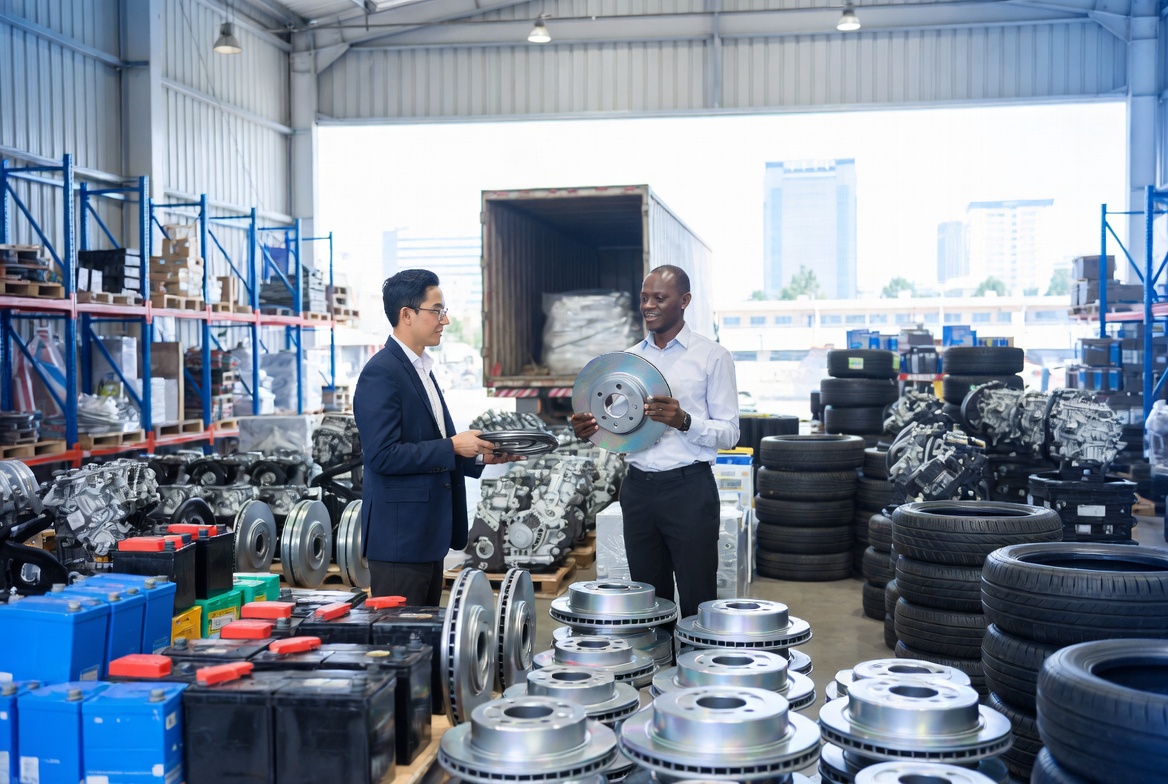

The 2026 Guide to Winning Kenya’s Auto Parts Aftermarket Without a Local Sales Team
Kenya’s roads are carrying more vehicles than ever before — and most of them are aging, imported, and in constant need of parts. For international auto parts manufacturers, this is one of the fastest-growing, most underexploited B2B opportunities in East Africa right now.
Here is the scenario that plays out for manufacturer after manufacturer entering this market:
A spare parts, tyre, battery, or lubricant brand identifies Kenya as a priority growth market. The data is compelling, vehicle imports keep climbing, fleets keep expanding, and demand for replacement parts is structural rather than seasonal. The team builds a product catalog, translates a price list, and starts emailing distributors found through a Google search or an old trade directory.
Then the silence sets in.
Emails go unanswered. WhatsApp numbers turn out to be disconnected. The few replies that do come in lead nowhere, a polite acknowledgment, then nothing. Samples sent at real cost and real shipping time disappear into an inbox with no follow-up. Nobody on the manufacturer’s side can tell whether the message ever reached an actual decision-maker, or simply landed in a generic info@ address that nobody checks. Meanwhile, Asian suppliers who have spent a decade building relationships with Nairobi’s Kirinyaga Road distributors keep winning the orders that should have been winnable.
This is not a product problem. It is a route-to-market problem, and it is entirely solvable with the right local intelligence, the right outreach infrastructure, and the right partner who can open doors from inside the market.
This guide breaks down exactly how international auto parts manufacturers are building verified distributor and buyer relationships in Kenya in 2026, completely, practically, and without the cost of flights, local offices, or months of trial and error.
LeadWhizz by the Numbers: Proven B2B Results Across Africa
Before the strategy, the evidence. LeadWhizz has supported international manufacturers across multiple industries — including automotive aftermarket — in finding qualified distributors, importers, and buyers across Africa.
| 3M+ | 15+ | 20+ | 40–60% | Weeks |
| Verified business leads across Africa | Countries reached with East Africa specialisation | Industries supported — including automotive aftermarket | Average email open rates on Kenyan B2B campaigns | Qualified introductions delivered — not months |
These results reflect real engagements across automotive, FMCG, industrial products, logistics, manufacturing, and agriculture — across Kenya and the wider East African region.
Why Kenya’s Automotive Aftermarket Is Booming in 2026
Kenya’s vehicle population has grown steadily for over a decade, driven almost entirely by used vehicle imports from Japan, the UK, and Asia. That import-heavy fleet composition is, on its own, the single biggest reason demand for auto parts distributors in Kenya keeps climbing, older imported vehicles need more frequent part replacements than new ones, and owners need them sourced affordably.
A few structural drivers are accelerating this further:
- Rising vehicle imports — Mombasa port continues to process growing volumes of used vehicles annually, feeding a steady pipeline of cars, vans and trucks that all eventually need brake pads, filters, batteries and suspension parts
- Fleet expansion — logistics, ride-hailing, agribusiness and construction sectors are all growing their commercial fleets, creating large institutional buyers with recurring procurement needs
- Urbanisation — Nairobi, Mombasa, Kisumu and Nakuru are growing fast, and denser urban traffic means more wear-and-tear, more accidents and more workshop visits
- A maturing maintenance culture — Kenyan vehicle owners and fleet managers are increasingly proactive about servicing rather than reactive, widening demand beyond emergency repairs
Tighter regulation is reinforcing this trend rather than slowing it. In July 2025, Kenya’s standards authority moved the maximum age for imported used vehicles from eight years to a rolling seven-year cap, alongside stricter inspection requirements. Fewer brand-new replacements are entering the fleet at any one time, which means the existing vehicle population stays on the road longer and leans even more heavily on the aftermarket to stay roadworthy, good news for any manufacturer building a long-term distribution presence rather than chasing one-off shipments.
Nairobi: Kenya’s Auto Parts Distribution Hub
Nairobi functions as the commercial nerve centre of Kenya’s automotive aftermarket. Kirinyaga Road and the Industrial Area host the country’s densest concentration of parts wholesalers, importers, and specialist dealers, many of them supplying garages and smaller retailers as far away as Kisumu, Eldoret, and Nakuru. A distributor relationship established in Nairobi frequently becomes the springboard for nationwide reach, because Nairobi-based wholesalers already maintain the upcountry networks that would otherwise take years for an international brand to build independently.
Mombasa: The Import Gateway
Mombasa’s port is the physical entry point for the vast majority of Kenya’s vehicle and parts imports, which makes it a strategically important market in its own right, not simply a logistics waypoint. Importers and clearing-and-forwarding-adjacent distributors based in and around Mombasa often move large volumes quickly, and a relationship here can shorten the physical distance between your shipment and the shelf considerably.
Demand in Kenya’s auto parts aftermarket is structural, not seasonal — which is exactly why it rewards manufacturers who commit to building real distribution relationships rather than one-off shipments.
The Biggest Challenge: Finding Reliable Buyers Remotely
Despite the opportunity, most international manufacturers face one major obstacle when entering Kenya: trust. Kenya’s auto parts trade is relationship-driven and largely informal in how deals actually get done, even though the buyers themselves are sophisticated. Distributors, importers and garage owners want to talk to someone who understands their business before they commit shelf space or capital to a new brand.
The questions we hear most often from international B2B and export managers:
- How do we identify legitimate distributors and importers in Kenya without visiting?
- How do we verify garage and workshop buyers from overseas?
- How can we compete with Asian suppliers who already have decade-long relationships?
- How do we avoid wasting time on inactive leads or unresponsive contacts?
- How do we navigate KEBS and import compliance before goods reach port?
Trying to manage this from abroad — without a local presence, local language fluency (English and Swahili both matter here), or visibility into who the real decision-makers are, usually results in slow replies, ignored emails, and meetings that never materialise.
This is the gap that turns a strong product into a stalled market entry. It is rarely a question of demand — Kenya’s appetite for affordable, reliable auto parts is not in doubt. It is a question of whether the right buyer ever actually sees your offer, delivered in a way that signals you are a serious, long-term supplier rather than another overseas brand testing the water with a mass email blast.
The 5 Buyer Segments Worth Targeting in Kenya’s Auto Parts Market
Understanding your buyer segments is the foundation of any serious push to sell spare parts in Kenya. The market isn’t one audience — it’s several, each with different purchasing behaviour, volume, and price sensitivity. The partner type you target first determines the outreach approach, the catalog you lead with, and the agreement structure you should be prepared to negotiate.
| Buyer Type | What They Do | Why It Matters |
| Distributors & Wholesalers | Buy in bulk for resale across the country — concentrated around Nairobi’s Kirinyaga Road and Industrial Area auto parts hubs | Fastest route to national reach — they already have the buyers, logistics and shelf space |
| Importers | Bring in container loads directly and need reliable, certifiable suppliers for long-term contracts | High-volume, recurring orders once trust and compliance are established |
| Garages | High-volume, price-sensitive buyers needing consistent stock of fast-moving parts | Frequent, repeat purchasing — a strong indicator of product fit and quality perception |
| Independent Workshops | Smaller-scale repair operators serving local neighbourhoods and specific vehicle makes | Wide geographic distribution — useful for testing demand across regions |
| Fleet Managers | Corporate and logistics fleet operators prioritising reliability and bulk-supply agreements over price alone | Ideal for recurring, contracted B2B revenue rather than one-off sales |
Each segment requires a slightly different pitch, and treating them identically is one of the fastest ways to waste outreach effort. Distributors and importers respond to volume economics and exclusivity terms; garages and workshops respond to price, consistency of stock, and how quickly a replacement order can be fulfilled; fleet managers respond to reliability data, warranty terms, and the ability to support a bulk, recurring supply contract rather than a single transaction.
The 6 Outreach Methods Manufacturers Try — And Why Most Underperform
1. Mass Cold Email Blasts
Sending a full catalog and price list to a purchased or scraped contact list rarely converts. Many addresses are outdated, many recipients are not decision-makers, and a generic ‘Dear Sir/Madam’ pitch reads as exactly what it is, spam that Kenyan buyers have learned to ignore. Open rates on this kind of outreach typically sit in the low single digits, and the few replies that do arrive are rarely from anyone with purchasing authority.
2. Generic Online Directories
Searching ‘auto parts distributors in Kenya’ produces long lists with varying accuracy. Many listings are outdated, many businesses are no longer operating in that category, and the contact details that remain are frequently wrong. Without a verification step, manufacturers can spend weeks chasing numbers and emails that lead nowhere.
3. Trade Shows Without Preparation
Exhibiting at a Kenyan automotive expo without pre-event outreach means relying entirely on walk-up footfall. Without a qualification system and a follow-up plan, even the right contacts go cold within 72 hours of the show closing, and the cost of the stand, travel, and shipping samples rarely justifies the handful of usable leads that result.
4. Competing on Price Alone Against Asian Suppliers
Chinese and Indian manufacturers have built deep, long-standing relationships with Kenyan importers over decades, often backed by flexible credit terms and established logistics arrangements. Trying to out-price them without offering verified quality, sample evaluation, and direct relationship-building usually fails — Kenyan buyers already know where to find cheap parts, so price alone is rarely the deciding factor in switching suppliers.
5. Generic LinkedIn Outreach
LinkedIn is growing as a professional channel among Kenyan distributors and fleet managers, but connection requests followed immediately by a product pitch tend to be ignored or rejected. In a relationship-first market, this sequencing signals exactly the wrong things about how your company does business — it reads as transactional rather than as the start of a genuine partnership.
6. Hiring an Unvetted Local Agent
Engaging an individual local agent or consultant in Kenya can work when the right person is found. The challenge is vetting that person remotely, and the retainer-plus-commission cost structure is significant for a manufacturer still validating market demand. Without a structured brief, clear KPIs, and accountability built in from the start, outcomes are highly inconsistent.
Proven B2B Lead Generation Strategies That Actually Work
Build a Verified Database of Active Buyers
The single biggest lever for success is starting with accurate, current contact data — real decision-makers at distributorships, garages and fleet operations, not outdated directory listings. A verified database turns outreach from a numbers game into a targeted conversation, and it means every email, call, or WhatsApp message lands with someone who actually has the authority to evaluate your product.
Use Multi-Channel Outreach
Kenyan B2B buyers are highly responsive on WhatsApp, often the fastest way to get a reply, especially when the first message is personalised rather than templated. Pairing WhatsApp with structured email sequences and targeted telemarketing calls creates multiple touchpoints that build credibility rather than feeling like spam. A buyer who sees a brief, professional WhatsApp introduction, followed a few days later by a confirming email and then a courteous follow-up call, experiences a company that is organised and serious, not one firing off a single message and hoping for the best.
Promote Product Catalogs and Samples Strategically
Sharing a focused, relevant product selection, rather than an overwhelming full catalog, followed by an offer of samples for evaluation, gives distributors and garage owners a low-risk way to test quality before committing to a larger order. Leading with the two or three products most relevant to a specific buyer’s existing portfolio consistently outperforms sending the entire range and asking them to figure out the fit themselves.
Run Pre-Exhibition Outreach
If you’re exhibiting at a Kenyan trade show, don’t wait until the event to start conversations. Reaching out to qualified buyers beforehand to book meetings turns a trade show from a footfall gamble into a calendar of pre-confirmed, high-intent conversations, dramatically improving ROI on the trip. A manufacturer that arrives with even five scheduled meetings already booked will typically out-perform a much bigger stand relying purely on passing traffic.
A shortlist of ten genuinely qualified, pre-vetted buyers consistently outperforms a database of a thousand unverified contacts.
Outreach Methods Compared
| Method | Cost | Speed | Success Rate |
| Mass cold email blast | Low | Slow | Very Low |
| Generic online directories | Low | Very slow | Very Low |
| Trade show — unplanned | High | Slow — months | Low |
| Unvetted local agent | Medium | Variable | Variable |
| Trade show + LeadWhizz pre-event outreach | Medium | Fast — weeks | High |
| LeadWhizz verified B2B campaign | Efficient | Fastest | Very High |
Compliance and Logistics Considerations by Product Category
Different product categories carry different regulatory and logistical requirements in Kenya, and getting ahead of these prevents costly delays at port. Kenya’s standards environment has also been tightening rather than loosening, KEBS introduced stricter inspection and quality requirements for imported vehicles and components in 2025, which makes early compliance planning more important than ever for any manufacturer hoping to build a durable, long-term presence rather than a single test shipment.
| Category | Key Requirement | Risk If Ignored |
| Spare Parts | Standard import documentation; KEBS conformity checks depending on classification | Shipment delays and holds at port of entry |
| Tyres | Specific KEBS quality and safety standards | Non-compliant shipments can be held or rejected |
| Batteries | Environmental handling regulations due to hazardous material content | Clearance and distribution restrictions if non-compliant |
| Lubricants | Product registration and quality verification before marketing | Cannot be legally sold until registration clears |
Partnering with a distributor who already understands these requirements, rather than learning them shipment by shipment — is one of the most effective ways to de-risk early-stage market entry. Established distributors typically have existing relationships with clearing agents and KEBS-approved inspection bodies, which can shorten clearance timelines considerably compared to a manufacturer navigating the process for the first time on their own.
Best Practices for Auto Parts Market Entry in Kenya
Based on LeadWhizz’s experience across 20+ industries and 15+ African markets, these are the practices that consistently separate successful remote market entries from costly failed attempts:
- Prioritise verified relationships over mass lead generation, a shortlist of 10 genuinely qualified, pre-vetted buyers produces better outcomes than a database of 1,000 unverified contacts
- Understand local pricing expectations and buying behaviour, Kenyan distributors and garages have specific price sensitivity, payment term expectations, and minimum order volumes; validate these before finalising your market offer
- Offer distributor incentives, training, and marketing support, the partners who perform best are those who receive active brand support, not just a product catalogue and a price list
- Begin with pilot shipments or limited territory agreements , validate market demand and partner capability before committing to an exclusive national distribution arrangement
- Track meaningful KPIs from day one, sales growth, garage and workshop penetration, response rates, and meeting conversion, not just email opens and calls made
- Use local partners to simplify compliance and standards requirements, your distributor’s existing regulatory relationships are one of the most undervalued assets in Kenyan market entry
- Plan strategic in-person visits only after validating market demand, your travel budget delivers dramatically more value when every meeting is with a pre-qualified, pre-warmed buyer who was expecting you
What to Evaluate Before Committing to a Distributor in Kenya
Finding a potential distributor is only half the work. Evaluating whether they are genuinely the right fit — before you sign an agreement — is where many international manufacturers make avoidable mistakes. LeadWhizz builds due diligence criteria into every buyer introduction.
Operational Capacity
- Does the company have the warehousing, logistics and distribution infrastructure to handle your product volume?
- Do they have the financial capacity to manage inventory, credit terms and import compliance costs?
- How many sales representatives do they have, and what is their current geographic coverage?
Portfolio Fit
- What products or brands do they currently represent, and do those complement or compete with yours?
- Are they actively growing their portfolio, or at capacity with existing suppliers?
- Have they worked with international manufacturers before, and what were the outcomes?
Market Credibility
- What is their reputation among garages, workshops and fleet buyers in their target geography?
- Do they have documented sales rotation data, proof they can move product, not just store it?
- Are they compliant with KEBS and other regulatory requirements relevant to your product category?
Relationship Signals
- Are they genuinely interested in your product, or responding to any outreach regardless of fit?
- Do they ask intelligent questions about your brand, margin structure and market positioning?
- Are they prepared to invest in marketing, promotions and after-sales support?
From Cold Market to Signed Distributor: A Realistic Scenario
Consider a mid-sized European brake components manufacturer entering East Africa for the first time. Initial efforts generic emails to a purchased contact list, generated almost no replies over several weeks. Of the handful of responses received, none came from anyone with actual purchasing authority, and the team had no reliable way to tell which contacts were even still operating.
After shifting to a verified-database and multi-channel approach, the outreach team identified 40 active distributors and fleet operators specifically dealing in the relevant product category. Personalised WhatsApp introductions, followed by sample offers to the most responsive contacts, led to 12 qualified meetings within a month, each one with someone who had the authority to make a purchasing decision.
Three of those conversations converted into signed distribution agreements, and a fourth distributor requested exclusivity talks ahead of an upcoming Nairobi trade expo. The manufacturer’s sales team, who travelled to Nairobi for the first time only after this pipeline was already built, spent their entire trip in pre-confirmed meetings rather than cold introductions, and closed two further agreements during that single visit. The difference wasn’t the product, it was the precision and structure of the outreach.
The most reliable path to market entry in Kenya’s auto parts sector is through verified introductions from a partner who already knows the distribution networks — not cold outreach into the unknown.
When Physical Presence Actually Matters — and When It Does Not
LeadWhizz’s remote market entry system handles buyer identification, outreach, qualification and introduction entirely without travel. But physical presence does add significant value at specific moments:
- The first major distribution agreement, showing up in person signals commitment and respect, which matters in Kenya’s relationship-first business culture
- Product demonstrations, for technical components like brake systems, batteries or specialised lubricants, an in-person demonstration can accelerate a distributor’s decision significantly
- Annual relationship maintenance, distributors who never see their international suppliers gradually deprioritise them in favour of brands that do show up
- Crisis resolution, when a shipment, quality, or payment issue arises, in-person presence resolves situations that remote communication often cannot
The key insight: a remote-first buyer search process does not replace the value of eventually being in the room. It ensures that when you do travel to Nairobi or Mombasa, every meeting is pre-qualified, pre-warmed and ready to move forward, so your trip closes deals rather than opens cold introductions.
How LeadWhizz Functions as Your Local Presence in Kenya
LeadWhizz does not simply deliver contact lists. LeadWhizz acts as an operational extension of your business inside Kenya, combining verified lead intelligence, localised outreach, and relationship facilitation into a complete remote market entry system.
- Verified contacts across distributors, importers, garages, workshops and fleet operators every contact confirmed active and accurately attributed before it ever reaches your outreach list
- Custom databases tailored to your specific product category, tyres, batteries, lubricants or general spare parts, built around the buyer profile that fits your offer
- Full outreach execution across WhatsApp, email and telemarketing, handled by a team that understands local buyer behaviour and language preferences in both English and Swahili
- Meeting booking, so your team’s time is spent in qualified conversations with genuinely interested buyers, not chasing cold leads or waiting on unanswered emails
- Compliance guidance on KEBS and import requirements relevant to your product category, so shipments move smoothly once a partnership is signed
Why LeadWhizz Outperforms Generic Outreach
| ❌ Generic Outreach | ✅ LeadWhizz Approach | 📈 Business Impact |
| Generic emails to scraped or outdated contacts | Verified, current buyer databases by category | Higher engagement and response rates |
| No local cultural or language understanding | Localised outreach in English and Swahili, WhatsApp-first | Faster trust-building from first contact |
| Unverified, unqualified leads | Buyers screened for capacity and category fit | Reduced wasted sales effort |
| No compliance guidance | KEBS and import requirement guidance built in | Fewer shipment delays at port |
| No relationship facilitation | Warm introductions with full context on both sides | Quicker movement toward negotiations |
Your Kenya Auto Parts Market Entry Checklist
- A verified, segmented contact database, distributors, importers, garages, workshops and fleet managers
- A multi-channel outreach plan combining WhatsApp, email and telemarketing
- A focused product catalog with a sample offer ready to go
- Compliance documentation in order for your product category — KEBS, environmental, registration requirements
- Pre-exhibition outreach scheduled if you’re attending a trade show
- Due diligence criteria defined for evaluating operational capacity, portfolio fit, market credibility and relationship signals
- A local partner who can build trust faster than cold outreach alone
🤝 Start Building Verified Auto Parts Buyer Relationships in Kenya Today
No flights. No local office. No costly trial and error.
Here is exactly what happens when you reach out:
- Step 1: Contact LeadWhizz — by email or via our website
- Step 2: We respond within 48 hours to schedule your Free Discovery Call
- Step 3: On the call, we map your product category, buyer segments, and volume requirements
- Step 4: Within 48 hours you receive your Free Kenya Auto Parts Buyer Database Audit
- Step 5: We identify, qualify, and connect you with verified buyers — so your first conversation is a warm one
The Discovery Call is FREE. The Buyer Database Audit is FREE.
Verified Leads. Measurable Growth. Guaranteed Results.
📩 b2b@leadwhizz.africa │ www.leadwhizz.africa
Frequently Asked Questions
Q: How long does it take to find a qualified auto parts distributor in Kenya through LeadWhizz?
LeadWhizz typically delivers a shortlist of verified, qualified buyers within 2 to 4 weeks of engagement starting, with first conversations happening within 3 to 6 weeks — not the months a traditional trade-show-only approach requires.
Q: Do I need to travel to Kenya to start selling auto parts there?
Not for identification, outreach, qualification and introduction stages, LeadWhizz manages this entire process remotely via WhatsApp, email and phone from local Kenyan numbers. Travel adds the most value once buyers are already qualified and warmed, typically at the point of signing a major agreement or running a product demonstration.
Q: Which auto parts categories does LeadWhizz cover in Kenya?
LeadWhizz builds verified buyer databases across spare parts, tyres, batteries and lubricants, covering distributors, importers, garages, workshops and fleet operators nationwide.
Q: How does LeadWhizz verify that a distributor or buyer is genuine?
Every contact goes through a verification process confirming active operational status, product category fit, and genuine purchasing interest before an introduction is made, so you’re never chasing a dead lead. Each shortlisted buyer also receives an assessment against the operational capacity, portfolio fit, and market credibility criteria covered earlier in this guide.
Q: Can LeadWhizz help with KEBS and import compliance as well as lead generation?
Yes. While LeadWhizz’s core focus is verified buyer identification and outreach, every engagement includes guidance on the KEBS and import requirements relevant to your specific product category, helping you avoid the most common causes of shipment delay at port.
Leave a Reply